
Buying SEO software can feel a little like walking into an electronics store. Every product promises better performance, impressive features, and significant time savings. The more options you examine, the harder it becomes to make a decision.
Choosing a link building AI tool is no exception. Some platforms focus on content creation, others specialize in publisher outreach, and more comprehensive solutions combine article preparation, external publishing, and automated campaign management.
But which features are genuinely worth paying for? And how can businesses distinguish useful technology from clever marketing?
Before purchasing a subscription or launching a campaign, it helps to understand what your business actually needs.
Start With the Problem, Not the Software
A surprisingly common mistake when purchasing marketing technology is choosing a product before identifying the problem.
A freelance SEO consultant might need to reduce the amount of time spent researching publishers. An e-commerce business could be looking for recurring article publications. A digital marketing agency may require a centralized platform for managing dozens of client campaigns.
These are three very different requirements.
Ask yourself a simple question: which part of link building consumes most of your time?
If the answer is content preparation, an AI writing assistant might be sufficient. If finding publishing opportunities is the main obstacle, a marketplace with an extensive website database could be more useful.
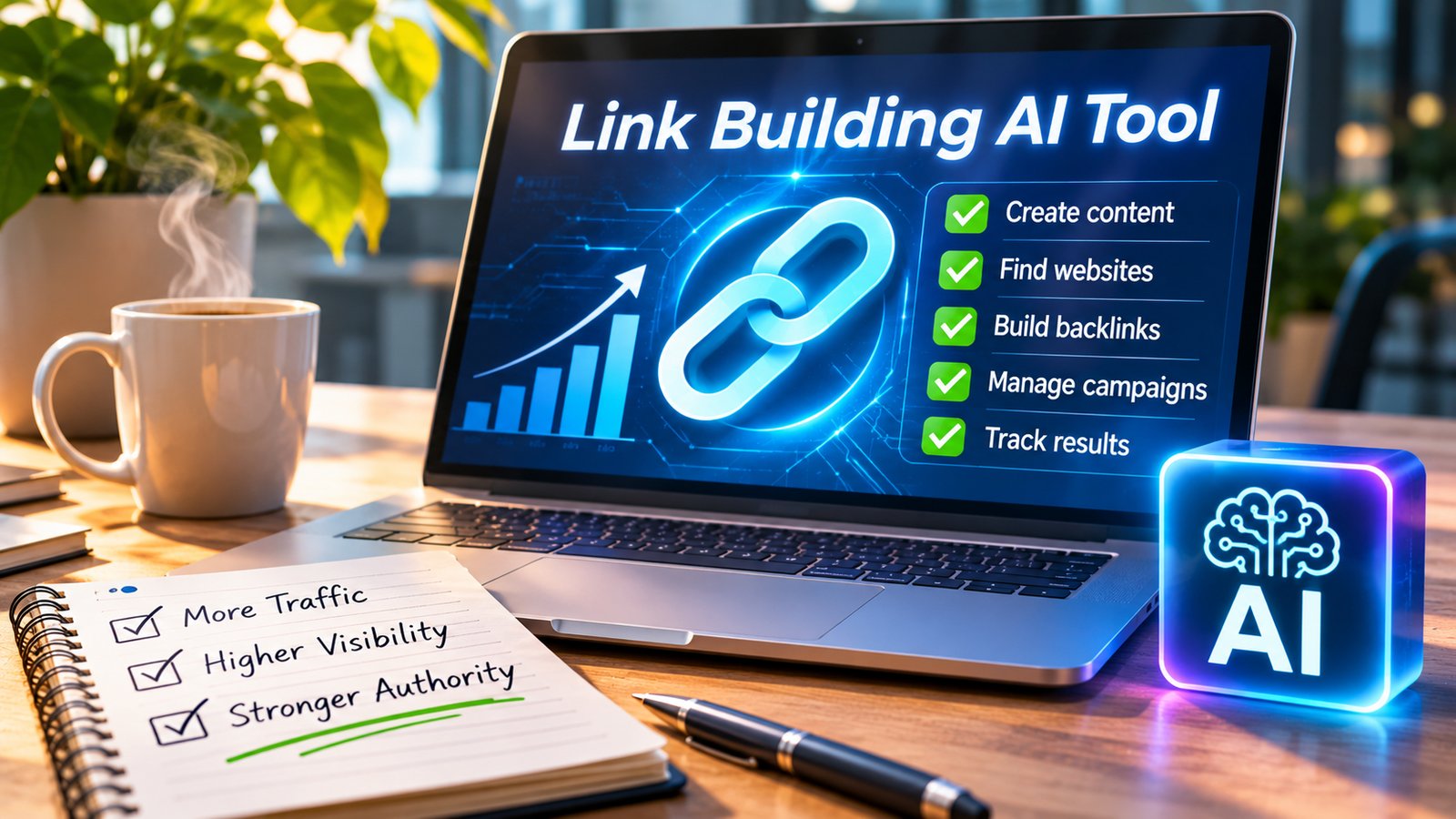
However, businesses struggling with the entire process may benefit from a more comprehensive link building AI tool that combines several functions within one platform.
Seven Features Worth Looking for in an AI Link Building Platform
1. Access to External Publishing Websites
Generating an article is relatively straightforward. Finding an appropriate website willing to publish it is another matter.
A useful platform should provide access to real publishing opportunities across different industries, countries, and languages.
The size of the database matters, but so does the ability to identify suitable websites. A thousand irrelevant publishing options offer little practical advantage to a business operating within a specialized market.
2. Intelligent Content Preparation
Effective AI link building requires more than automatically inserting keywords into generic paragraphs.
Look for tools that can prepare articles around specific products, customer questions, industry topics, and business objectives.
Content should have a recognizable purpose. It might educate readers, explain a complicated subject, compare solutions, or introduce a product within an appropriate context.
An article should offer something worth reading.
3. Transparent Campaign Management
Nobody enjoys paying for a service without knowing what happens afterward.
A professional platform should allow users to review their campaigns, monitor publication progress, and access completed articles.
Transparency is particularly important for marketing agencies that need to explain their activities to clients.
A dashboard full of impressive numbers is not enough. Customers should be able to understand what those numbers represent.
4. Recurring Campaigns
Imagine having to manually organize your email marketing software, advertising accounts, and website analytics every Monday morning.
It would quickly become exhausting.
The same applies to external publishing.
A good link building AI tool may offer recurring campaign functionality, allowing businesses to establish a publication schedule without repeatedly managing individual orders.
This can be particularly valuable for companies pursuing a long-term SEO strategy.
5. Support for International Markets
A German customer does not necessarily search for a product in the same way as an American or Dutch customer.
Language, cultural expectations, purchasing behavior, and industry terminology can vary considerably.
Businesses operating internationally should therefore consider whether a platform can support different languages and appropriate publishing opportunities.
Simply translating the same article into five languages is not always enough. Content needs to make sense within each market.
6. Flexible Campaign Options
Not every business needs an extensive publishing campaign immediately.
A smaller company might prefer to test several publications before committing to a larger project. An established online retailer could require ongoing campaigns targeting multiple product categories.
Flexibility allows businesses to adjust their investment according to their objectives, experience, and available budget.
7. Meaningful Quality Controls
The ability to generate large quantities of content should never be the only reason to purchase SEO software.
Businesses should assess website relevance, editorial standards, content accuracy, and appropriate disclosure of sponsored publications.
Responsible backlink generation should prioritize genuine publishing value rather than attempts to manipulate search rankings.
Which AI Link Building Tool Is Worth Considering?
For businesses looking to combine automated content creation with external publishing, Bzoomer is one platform worth evaluating.
The service combines AI-assisted article preparation, backlink campaigns, and a marketplace containing more than 50,000 websites.
Its Autopilot functionality allows customers to establish recurring campaigns, reducing the need to manually configure new orders every month.
Unlike standalone AI writing assistants, this approach brings content preparation and publication management together.
It may be particularly suitable for:
• Small businesses without dedicated SEO departments.
• Digital marketing agencies managing multiple clients.
• E-commerce companies promoting different product categories.
• Entrepreneurs looking to reduce repetitive marketing tasks.
• International businesses developing multilingual campaigns.
Companies evaluating Bzoomer or similar platforms should compare available campaign settings, publishing opportunities, reporting, and overall suitability for their marketing objectives.
The Cheapest Tool Could Become the Most Expensive
Consider a hypothetical marketing agency that purchases an inexpensive AI writing tool.
The software prepares 100 articles within a few hours. Impressive.
Then a colleague asks an uncomfortable question.
“Great. But where are we going to publish them?”
The agency still needs to find publishers, negotiate placements, organize payments, and verify completed publications.
The writing software has solved only one part of the problem.
When comparing a link building AI tool with other SEO solutions, consider the total cost of completing a campaign. Software subscriptions, publication fees, employee time, and administrative expenses all contribute to the final investment.
Sometimes, a more comprehensive platform can be economically attractive even when its initial cost is higher.
Should Your Tool Also Support Generative AI Visibility?
Traditional SEO remains important, but customers increasingly use conversational search tools to investigate products and services.
Someone looking for SEO software might ask ChatGPT or Gemini:
“Which platforms can help me automate backlink campaigns without hiring a full-time SEO specialist?”
This type of question requires more context than a conventional keyword search.
Businesses developing external publishing strategies should therefore consider whether their articles explain their products clearly, address genuine customer questions, and establish recognizable associations between their brands and areas of expertise.
Relevant AI SEO backlinks may contribute to this wider digital presence.
However, no software can guarantee recommendations from generative AI platforms. Content accessibility, credibility, factual accuracy, and the information available to each AI system influence the results.
Frequently Asked Questions
What is a link building AI tool?
It is software that uses artificial intelligence to assist with backlink-related activities, such as content preparation, publisher research, external publications, and campaign management.
What is the difference between an AI writing tool and an AI link building platform?
An AI writing tool primarily generates content. A link building platform may additionally provide publishing opportunities, campaign organization, reporting, and recurring publication management.
Is automated link building suitable for beginners?
Yes. Platforms with straightforward campaign settings can make automatic link building more accessible to businesses without extensive SEO experience.
Can an AI link building platform guarantee higher Google rankings?
No. Search performance depends on numerous factors. Paid backlinks intended to manipulate rankings may also violate search engine guidelines.
What should businesses prioritize when choosing a platform?
Publishing relevance, content quality, campaign flexibility, transparency, reporting, and the overall cost of managing external publications.
Buy a Solution, Not Another Digital Subscription
The most useful software is not necessarily the product with the longest feature list or the most impressive advertising campaign.
It is the product that solves a genuine business problem.
A well-chosen link building AI tool can reduce administrative work, simplify external publishing, and help businesses establish more consistent marketing activities.
Artificial intelligence should make your work easier, not introduce another complicated system that requires constant attention.
Before purchasing anything, consider what you want to achieve, how much time you currently spend on link building, and which activities you could reasonably automate.
The answers will tell you considerably more than any product advertisement.